
HISTORY OF SHIPBUILDING
The story of shipbuilding in Korčula stretches back thousands of years, to the island’s earliest inhabitants. Archaeological finds from Vela Spila in nearby Vela Luka reveal that prehistoric communities were already shaping tools and vessels, drawn to the island’s forests and its natural relationship with the sea.
This maritime tradition continued with the arrival of Greek colonists in the 6th century BC. Korčula’s shipbuilding is first formally recorded in the Korčula Statute of 1214, which includes detailed provisions governing ship construction, timber use, and penalties imposed by the Communal Council for illegal logging - early evidence of both craftsmanship and environmental stewardship. By the 15th century, Korčula shipyards were building ‘karakas’, among the largest and most advanced ships of their time.
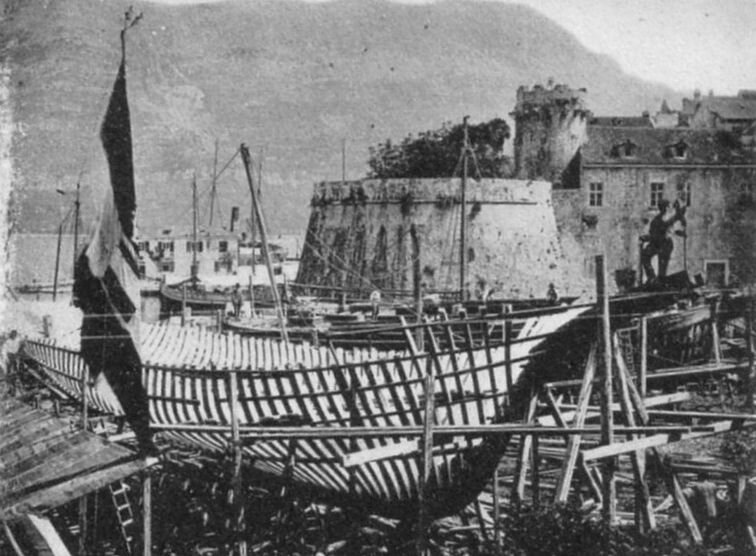
The craft reached its peak in the mid-19th century. Between 1853 and 1858, Korčula ranked third among Austro-Hungarian shipbuilding centres in total ship tonnage and workforce, surpassed only by Trieste (Italy) and Mali Lošinj (Croatia). Numerous books and scientific studies testify to the island’s importance during this golden age of wooden shipbuilding.
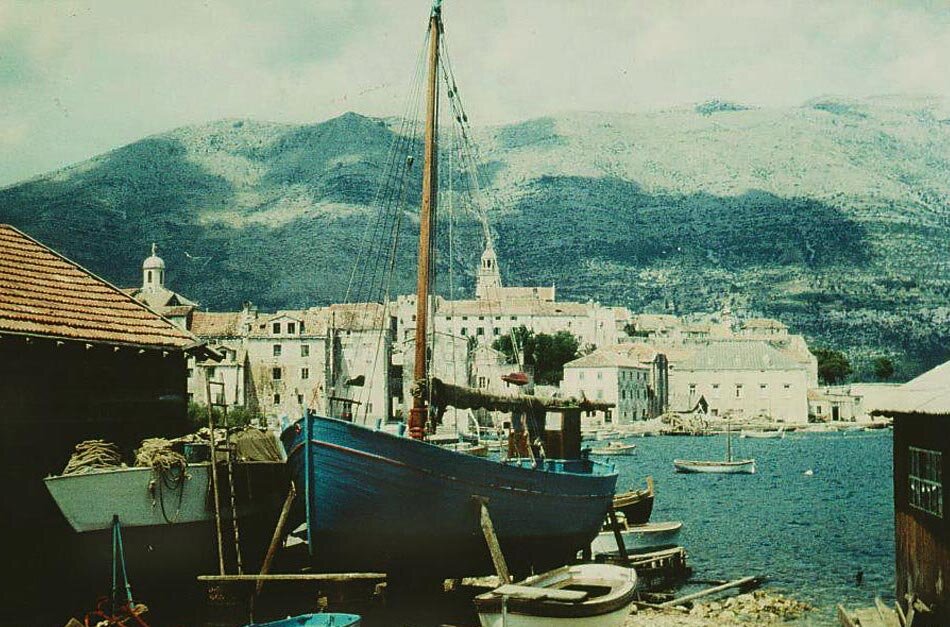
With the arrival of steamships and the decline of large sailing vessels, Korčula’s shipbuilders adapted once again, turning their skills to smaller wooden boats for fishing, transport, and leisure. Older generations still speak fondly of the island’s squeri famosi - the famous shipyards - recalling the rhythm of hammers and saws, and the songs of craftsmen shaping elegant, durable vessels from the island’s rich forests.